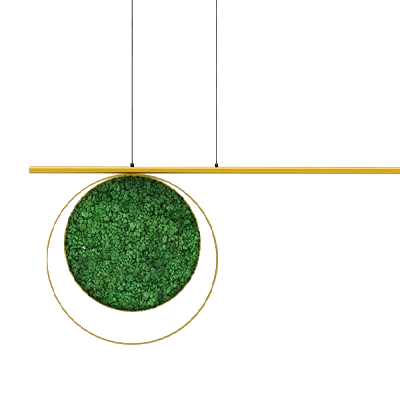
Acoustic Wellness in the Hybrid Workplace
The architect's guide to retrofitting offices for focus, video calls, and measurable acoustic comfort. Why “acoustic wellness” has replaced “open plan” as the top corporate design priority, and how preserved moss panels outperform conventional acoustic foam on the metrics that matter for WELL and LEED submissions.
Table of contents
Why acoustic wellness replaced open plan
The open plan office was not killed by the pandemic. It was killed by the video call. Once a third of any given workforce is on a Zoom, Teams, or Google Meet call at any given moment, the acoustic assumptions of the open plan stop working. Speech intelligibility collapses. Concentration becomes a private resource that employees carry in their headphones. Headphones, in turn, become a tell that the design has failed.
A panel of acoustic experts convened by the International WELL Building Institute identified this failure directly. When the use of personal protective equipment, in the form of noise-cancelling headphones, becomes the default coping mechanism for office workers, the hazard has not been removed. It has been transferred to the individual. Headphones at high volume create their own hearing-health problem. They isolate workers from each other. They are a sign that the building has not done its job.
The phrase “acoustic wellness” has emerged in 2024 and 2025 as the corporate response to this failure. It is more than acoustic privacy. It covers reverberation control, speech intelligibility, sound masking calibration, and the integration of biophilic surfaces that absorb mid-frequency sound while supporting cognitive recovery. Workplace strategists at BuzziSpace, Soft dB, and ekko Acoustics now treat acoustic wellness as a primary design driver, not an afterthought handled by ceiling tiles.
The shift is measurable. According to a global survey reported by BuzziSpace, half of office workers identify a less noisy environment as the single biggest contributor to their productivity, and over seventy percent frequently lose concentration during the working day. Forty-four percent state that their employer does nothing about it. The same survey identifies conversations among colleagues, phone calls, ringing phones, and circulation noise as the top acoustic distractions in the post-pandemic office.
What the data on hybrid offices actually says
Hybrid work is now the default model for European knowledge work. According to Cisco's 2025 Global Hybrid Work Study, fifty-three percent of German employees work in a hybrid arrangement, and the European return-to-office rate sits at approximately seventy-five percent. The implication for office design is unambiguous. Buildings are now used by a fluctuating, partially-present population on any given day, and the acoustic envelope must work for both a near-empty Monday and a saturated Wednesday.
The Soft dB analysis of activity-based working captures the resulting design problem. On a busy day, the building must absorb noise spikes from casual conversation, video calls, and circulation. On a quiet day, the same building must avoid the pin-drop awkwardness that makes employees feel surveilled by their own breath. Static acoustic schemes designed for the five-day office cannot do both.
Research cited in the IWBI panel from the University of California, Irvine, found that office workers are interrupted frequently enough that returning to a state of deep work after each interruption costs measurable time. A separate study referenced by acoustic engineer Amanda Robinson identified that sixty percent of UK office workers report being unable to concentrate due to the acoustic environment of their workplace. Concentration, in other words, is no longer a default property of the office. It must be designed in.

The hybrid market context
The hybrid market has expanded faster than corporate communication typically suggests. According to JLL's Global Workforce Survey, twenty-five percent of new office workspaces in 2024 integrated dedicated phone booths and private workstations designed for focused work. London, Singapore, Amsterdam, Paris, Dubai, Seoul, and New York are each expanding their flex office footprint, with coworking and flexible lease space now representing a significant share of net new office absorption in most major markets.
A 2025 study by Leesman, covering more than forty countries, found that nearly ninety percent of participants identify social contact as a very important part of office life. The modern office is no longer primarily a place for focused individual work. That work has migrated home. The office has become a social infrastructure, and the acoustic envelope of that infrastructure must support both candid conversation and high-stakes video presentation, often within the same hour and the same line of sight.
The global specification market has responded by elevating acoustic performance from a finishes line item to a primary brief criterion. Sustainability and wellness-focused buildings, prioritising air quality, noise reduction, and optimal lighting, now define the high end of the flex office market worldwide. The Workspace Design Show, NeoCon, and Orgatec circuits in 2025 confirmed the same pattern: every major office furniture vendor has moved acoustic claims to the front of their product communication.
Acoustic foam versus preserved moss: a head-to-head
The default acoustic surface in commercial offices remains acoustic foam, typically melamine-based, fabric-wrapped, or installed as suspended baffles. Preserved moss is rarely benchmarked against foam in workplace specification, which is precisely why the comparison matters.
The numbers, side by side:
| Metric | Acoustic Foam (1-inch) | Acoustic Foam (2-inch) | Greenmood Ball Moss |
|---|---|---|---|
| NRC (typical published range) | 0.40 | 0.65 to 0.85 | 0.73 |
| Testing standard | ASTM C423 | ASTM C423 | ISO 11654:1997 |
| Mid-frequency absorption (500 to 2000 Hz) | Moderate | Strong | Strong |
| Fire rating | Variable, often FR-treated melamine | Variable | B-S2-d0 (EN 13501-1) and FSI 0 / SDI 15 (ASTM E84) |
| Visual reading | Industrial, often hidden behind fabric | Industrial, often hidden behind fabric | Natural texture, biophilic |
| Maintenance | None to dust removal | None to dust removal | None |
| End-of-life | Petrochemical waste | Petrochemical waste | Compostable |
| WELL Feature 88 (Biophilia) credit | Does not contribute | Does not contribute | Contributes directly |
A 1-inch foam panel reflects roughly sixty percent of the sound energy that strikes it. A 2-inch foam panel performs better but typically requires fabric wrapping for fire compliance and visual acceptability in finished offices. Greenmood Ball Moss, tested to the European standard ISO 11654:1997, achieves NRC 0.73, in the same range as a high-end fabric-wrapped fibreglass panel, while delivering biophilic value that foam cannot.
Foam wins on per-square-metre raw cost. Preserved moss wins on every other axis that an architect specifies on: fire rating documentation, biophilia credit contribution, indoor air neutrality, end-of-life behaviour, and the visual reading of the surface in a finished interior.

Preserved moss as biophilic acoustic infrastructure
Preserved moss is a biological material that has had its natural moisture replaced through a glycerin stabilisation process. The result is moss that retains its colour, texture, and softness indefinitely, without irrigation, lighting, or biological activity. It does not grow. It does not release spores. It does not decompose. And, critically for acoustic specification, its three-dimensional surface structure absorbs sound across the same mid-frequency range that human speech occupies.
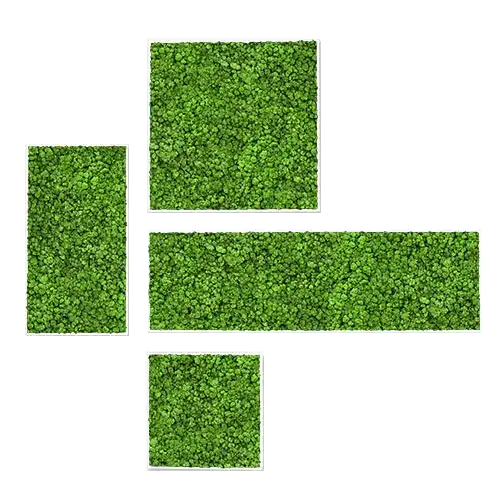
The Greenmood preserved moss range covers four primary species, each with distinct acoustic and visual properties.
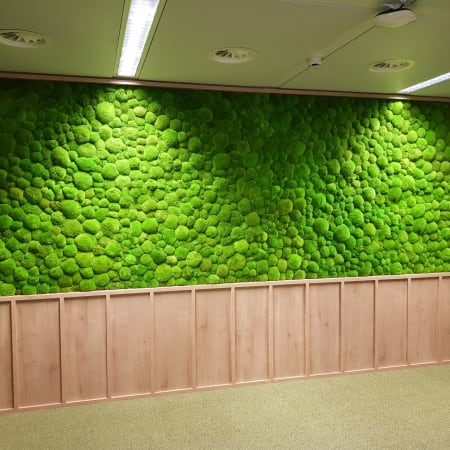
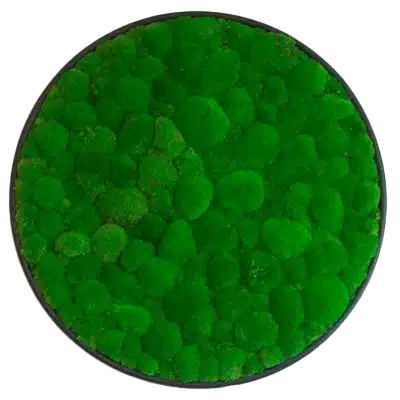
Dense pillow-like texture. The highest-performing acoustic moss in the range, tested at NRC 0.73 to ISO 11654. The default acoustic specification for hybrid office retrofits.

Softer, more uniform surface available in multiple colours. Specified for large logo walls, brand surfaces, and projects where the visual reading is more important than the absolute NRC value.

Wild, naturalistic surface combining multiple moss textures. Reserved for projects where a more textured, less manicured biophilic statement is required.
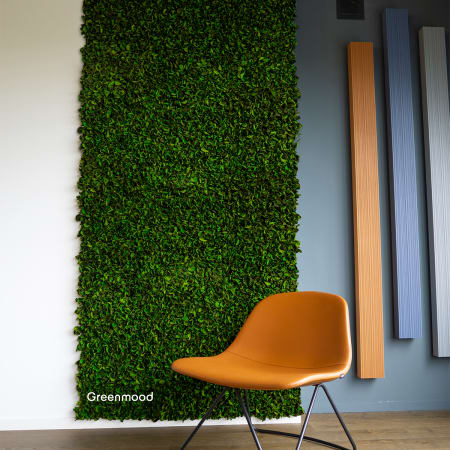
Reads as a flat, lush, garden-like surface. More frequently specified for hospitality and high-end residential than for corporate offices.
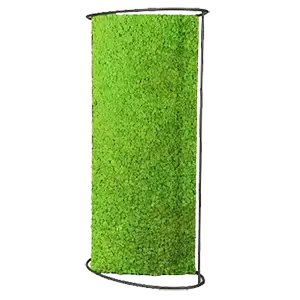
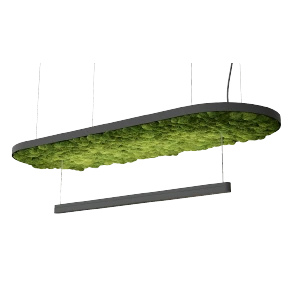
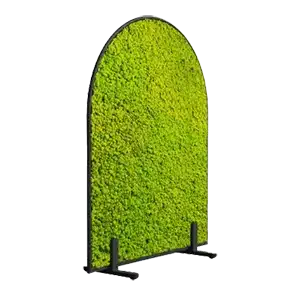
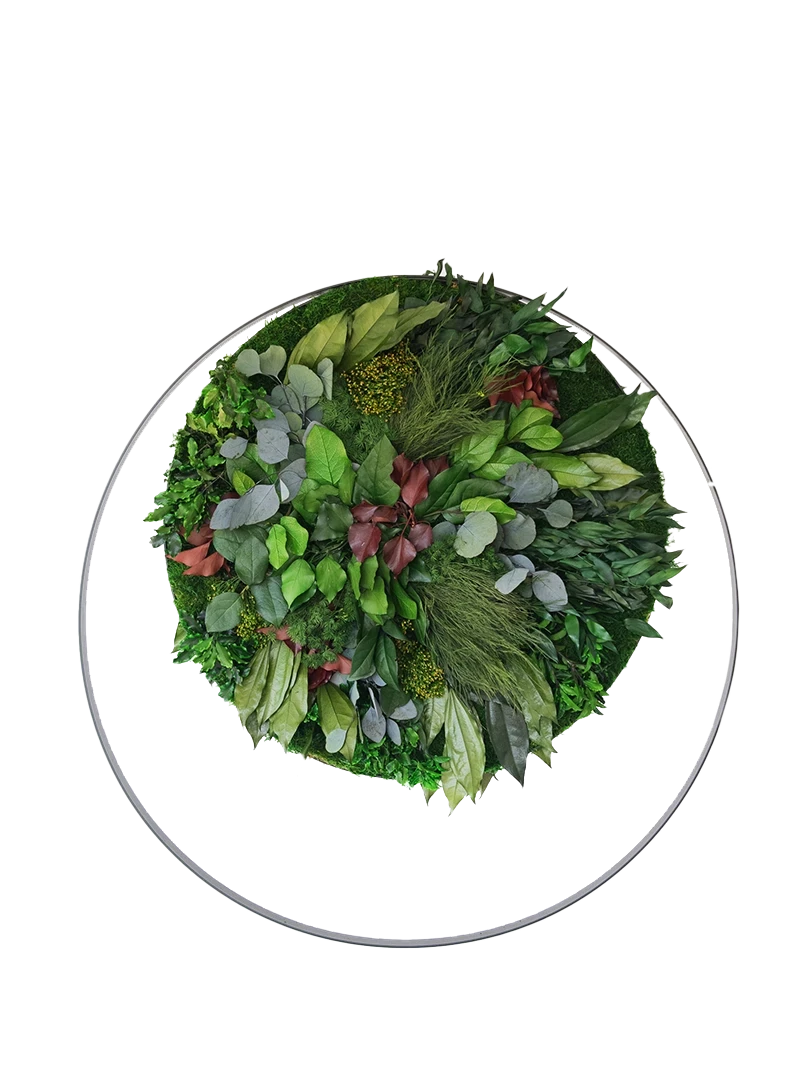
The Greenmood Design Collection extends the same acoustic logic into ceiling and lighting products. Hoverlight integrates preserved moss into a suspended luminaire that absorbs overhead reflection. Cascade delivers ceiling-mounted moss panels that double as acoustic absorbers above open meeting zones. G-Circle functions as a freestanding biophilic divider with acoustic value in transitional spaces. None of these products require water, electrical infrastructure beyond the lighting in Hoverlight, or structural reinforcement.
NRC, certification, and the specification pathway
For architects working on WELL and LEED projects, the specification of acoustic moss panels is not an aesthetic choice. It is a documentation question. The credits that biophilic acoustic surfaces support are concrete and well-defined.
The credit requires that reverberation time targets be met in defined space types. Ball Moss with NRC 0.73, tested to ISO 11654, generates documentation that contributes directly to reverberation time calculations. Acoustic foam can do the same, but foam does not also satisfy Feature 88.
The credit requires nature incorporation in the interior, with no distinction made between living and preserved biophilic elements. Preserved moss qualifies. Foam does not.
Preserved moss walls release no VOCs, no formaldehyde, and no particulates. They contribute positively to indoor environmental quality and qualify under the “nature in the space” pattern of the Occupant Experience credit family.
Greenmood Ball Moss carries a B-S2-d0 rating under EN 13501-1 (the European reaction-to-fire standard) and FSI 0 / SDI 15 under ASTM E84, the latter satisfying Class A interior finish requirements in the United States. This documentation enables specification in commercial interiors across the DACH market and North America without supplementary fire treatment.
The specification documentation package that an architect should request from a preserved moss vendor for a German corporate retrofit includes the ISO 11654 acoustic test report, the EN 13501-1 fire test certificate, a VOC emission test report or declaration of compliance, and a declaration of the glycerin stabilisation process and its plant-based, food-grade origin. Greenmood publishes all four.

Where moss panels belong in a hybrid floorplate
The hybrid office floorplate is no longer a single open space. It is a portfolio of acoustic zones, each with a different design brief.
Phone booths and focus rooms
The single highest-impact application for biophilic acoustic surfaces. A phone booth lined with Ball Moss panels delivers the acoustic absorption needed for clear speech transmission on video calls, while the texture of the surface reduces the claustrophobic reading that pure-foam booths produce. The user steps into a small space that sounds calm and looks alive, not into a padded cell.
Meeting rooms
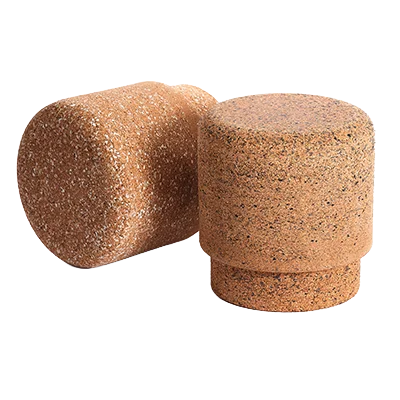
Rooms designed for video presentations and hybrid meetings benefit from acoustic surfaces on at least two non-parallel walls. Preserved moss panels combined with cork acoustic tiles create a reverberation profile that supports both microphone clarity for remote participants and human-scale conversation for in-room participants.
Open collaboration zones
Larger, more diffuse spaces where teams gather for short, informal exchanges. Hoverlight ceiling fixtures and Cascade panels deliver overhead acoustic absorption without consuming wall area, preserving the openness of the zone while controlling reverberation.
Quiet zones and library nooks
The hybrid equivalent of the home office. Spaces designed for individual deep work, with high acoustic absorption and visual cues that signal “do not interrupt.” A Ball Moss feature wall in a library nook performs both functions at once.
Reception and circulation
First-impression spaces where the visitor's reading of the brand is set in the first ten seconds. Preserved moss in reception communicates sustainability, design literacy, and a credible commitment to wellness, without the maintenance liability of a living wall in a high-traffic area.

How to specify for a corporate hybrid retrofit
A hybrid office retrofit moves from concept design through tender to installation in a tighter regulatory and procurement context than ground-up construction. The specification of preserved moss for these projects benefits from a few practical considerations.
Specify by acoustic performance, not by aesthetic. The tender will be evaluated on documented NRC values and fire compliance before it is evaluated on visual outcome. Lead with NRC 0.73 (ISO 11654:1997) for Ball Moss and the relevant fire rating: B-S2-d0 under EN 13501-1 for European projects, FSI 0 / SDI 15 under ASTM E84 (Class A) for North American projects. Attach the test reports as appendices.
Match the moss type to the zone. Ball Moss for high-spec acoustic zones (phone booths, executive meeting rooms, focus rooms). Reindeer Moss for brand-forward installations and large surface logos. Hoverlight and Cascade for ceiling acoustic treatment in open zones.
Coordinate with the WELL or LEED consultant early. The acoustic and biophilia credits cross-reference each other. A single Ball Moss specification supports both Feature 78 and Feature 88 in WELL v2, and a coordinated submission improves the overall project score without additional product specification.
Plan for installation in occupied buildings. Preserved moss panels weigh 3 to 5 kg per square metre, install in a single day for a 20 square metre area, and require no water, no electrical connection, and no structural assessment. For any retrofit where occupant disruption is a contractual concern, this is decisive.
Coordinate regional support. Greenmood operates direct sales coverage from Belgium HQ across Europe, with a North American team for US and Canadian projects, and regional partners across the Middle East, Asia, and Oceania. Full technical documentation, EN- and ASTM-standard test reports, and on-site specification support are available in the project's regional language.

Frequently asked questions
What is the NRC rating of Greenmood Ball Moss?
Ball Moss is tested to NRC 0.73 to ISO 11654:1997. This corresponds to seventy-three percent of incident sound energy absorbed by the surface. For comparison, a standard acoustic ceiling tile rates between NRC 0.55 and 0.70, a 1-inch acoustic foam panel rates approximately NRC 0.40, and bare drywall rates approximately NRC 0.05.
Does preserved moss contribute to WELL v2 acoustic credits?
Yes. Preserved moss panels contribute directly to WELL Feature 78 (Sound — Acoustic Comfort) through measured NRC absorption that supports reverberation time targets. They also contribute to Feature 88 (Mind — Biophilia) under the requirement for nature incorporation in interior design. No distinction is made in WELL v2 between living and preserved biophilic elements.
Is preserved moss compliant with German fire safety regulations for offices?
Greenmood Ball Moss carries a B-S2-d0 rating under EN 13501-1, the European reaction-to-fire standard adopted across Germany. This rating allows specification in most commercial building types in Germany without additional fire protection measures. Full test reports are available on request.
How does preserved moss compare with acoustic foam for hybrid office retrofits?
Preserved moss matches or exceeds the NRC performance of mid-thickness acoustic foam panels, while contributing to biophilia credits, releasing no VOCs, and presenting a finished biophilic surface that requires no fabric wrapping. Acoustic foam wins on per-square-metre raw cost. Preserved moss wins on every other specification criterion.
Can preserved moss be installed in phone booths and focus rooms?
Yes. Phone booths and focus rooms are the single highest-impact application for preserved moss in a hybrid retrofit. The acoustic absorption supports clear speech transmission on video calls, and the natural texture reduces the visual claustrophobia of pure-foam interiors.
How long do preserved moss panels last?
Greenmood preserved moss panels carry a 10-year warranty. With proper indoor installation, away from direct sunlight and excessive humidity, panels typically maintain their appearance for 10 years or more without intervention. Many installations remain visually unchanged after 15 years.
Does the German market require additional documentation?
Greenmood supplies all standard documentation in German for the DACH market, including the ISO 11654 acoustic test report, the EN 13501-1 fire test certificate, the VOC declaration of compliance, and the technical data sheet for each product line. Project-specific documentation, including custom installation drawings, is available on request.
Specification resources
- Ball Moss Acoustic Panels — NRC 0.73 product specification
- Cork Tiles by Alain Gilles — Acoustic cork specification
- Design Collection — Full range including Hoverlight, Cascade, G-Circle
- Hoverlight — Suspended biophilic luminaire with acoustic absorption
- Acoustic & Material Performance — ISO 11654 test data
- Fire Safety and Biophilic Materials — EN 13501-1 and ASTM E84 documentation
- Sustainability & LEED v5 — Certification pathways
- How to Specify Biophilic Acoustic Solutions — 5-step framework
For project-specific technical assistance, contact your regional Greenmood representative or email kontakt@greenmood.pl.