Biophilic Design & Workplace Wellbeing
Why nature-connected interiors are measurable performance infrastructure, not decoration.
Table of contents
Beyond aesthetics: the business case
The conversation around biophilic design has shifted. What began as an aesthetic preference among forward-thinking architects is now a quantifiable investment strategy backed by decades of peer-reviewed research.
Organizations spend 112 times more on people than on energy. Even a marginal improvement in occupant wellbeing and performance delivers returns that dwarf any savings from mechanical systems or energy optimization.
Biophilic design is not an amenity. It is performance infrastructure.
The data is now too consistent, too global, and too well-documented to treat nature connection as optional in professional interiors.
Journal of Biophilic Design, January 2026

What the research actually shows
The numbers behind the intuition
The most comprehensive global study on biophilic design in workplaces, the Human Spaces Report (Interface, 2015), surveyed 7,600 office workers across 16 countries and found consistent, statistically significant outcomes.
These gains were measured among workers in environments with natural elements: daylight, vegetation, natural materials, and views of nature. The effects were consistent across geographies, industries, and job roles.
More recently, a 2024 systematic review of 74 peer-reviewed studies published in Intelligent Buildings International confirmed significant psychological, physiological, and cognitive benefits of biophilic workplace design. A separate study in Nature Scientific Reports (2024) mapped the causal pathways through which biophilic environments influence occupant wellbeing.
This is no longer emerging evidence. It is established science.
Stress, cortisol, and the nervous system
How physical environments shape physiological responses
The foundational study in this field remains Roger Ulrich's 1984 landmark paper in Science, which demonstrated that surgical patients with views of trees experienced shorter hospital stays, required fewer painkillers, and received fewer negative evaluations from nurses compared to patients facing a brick wall.
Four decades later, the mechanism is well understood. Exposure to natural elements activates the parasympathetic nervous system, lowering cortisol levels, reducing heart rate, and accelerating recovery from cognitive fatigue.
A 2020 study by Yin et al. in Environment International showed that the physiological stress recovery response in biophilic environments begins within the first four minutes of exposure. A follow-up study (2021, Journal of Environmental Psychology) found that multisensory biophilic environments, combining visual, auditory, and olfactory elements, produced the strongest cognitive performance improvements.
Environmental stressors like noise, glare, crowding, and lack of privacy quietly erode mental health over time. Biophilic design addresses these at source, not through resilience programs, but through environmental conditions that reduce the baseline stress load employees carry into work.
For workplace designers, the implication is clear: biophilia is not about adding plants to break rooms. It is about designing environments where nervous systems can regulate, where sustained attention is possible, and where recovery happens passively throughout the day.
The absenteeism equation
Hard numbers, real savings
Research from the University of Oregon (Elzeyadi, 2011) found that 10% of employee absences could be attributed to architectural elements that failed to connect occupants with nature. Employees with direct views of nature averaged 57 hours of sick leave per year, compared to 68 hours for those without.
Terrapin Bright Green's Economics of Biophilia (2nd edition, 2023) calculated that organizations can save approximately $2,000 per employee per year through reduced absenteeism alone. For a 500-person office, that represents $1 million annually, before accounting for productivity gains.
The return on investment is not abstract. It is measurable in payroll, healthcare costs, and operational continuity.

Talent attraction and retention
The workspace as a competitive advantage
In a labor market where hybrid work is standard and employees have more choice than ever, the physical workspace must justify the commute. The Human Spaces Report found that 33% of global workers say office design would unequivocally affect their decision to work somewhere. In India, Indonesia, and the Philippines, the figure exceeds 60%.
Perhaps more telling: 47% of workers worldwide have no natural light in their workspace. In the UK and US, this figure reaches 66%. Natural light was the single most-requested workplace element globally, ahead of quiet zones, ergonomic furniture, or breakout spaces.
One in five workers has no natural elements whatsoever in their workspace.
Culture as a design project
Why CPOs and workplace strategists are paying attention
The Journal of Biophilic Design (January 2026) argued that Chief People Officers increasingly view workplace culture as a design project rather than a communication challenge. Physical environment signals reinforce organizational values in ways that town halls and value statements cannot.
Spatial hierarchy, access to daylight, acoustic control, choice and autonomy: these elements communicate what an organization actually values, not what it says it values. They embed culture into daily experience.
Biophilic workplaces support organizational objectives across multiple dimensions
- Leadership capacity: reduced cognitive load enables better decision-making and emotional regulation
- Performance: improved concentration, faster stress recovery, stronger engagement
- Connection: biophilic spaces balance prospect and refuge, enabling community without forcing constant interaction
- Mental health: calm, restorative spaces help regulate nervous systems under sustained pressure
- Technology balance: as AI accelerates efficiency, biophilic design protects uniquely human qualities: creativity, empathy, sensory intelligence
WELL Building Standard and biophilia
Formal recognition in certification frameworks
The WELL Building Standard v2, developed by the International WELL Building Institute (IWBI), formally incorporates biophilia within its Mind concept through two dedicated features.
For architects and designers pursuing WELL certification, biophilic wall systems are not supplementary. They directly contribute to credit achievement. And since many projects now pursue both LEED and WELL simultaneously, biophilic solutions that also carry EPD documentation and favorable embodied carbon profiles serve dual certification pathways.

Preserved systems: biophilia without complexity
Why maintenance-free matters for long-term performance
The evidence for biophilic design is compelling. The implementation challenge is often practical: living walls require irrigation, drainage, ongoing horticultural maintenance, grow lighting, and pest management. These systems introduce operational complexity that many organizations cannot sustain.
Preserved biophilic systems offer a different proposition.
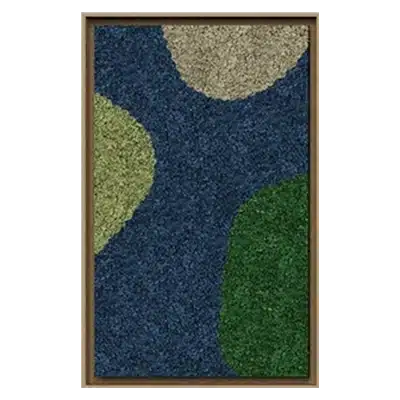
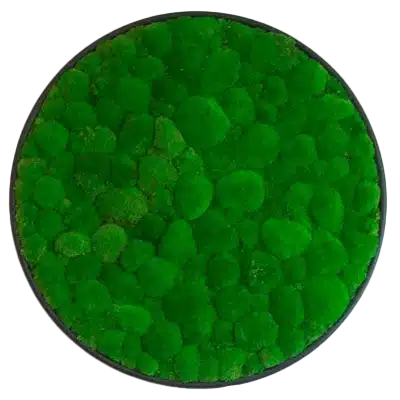
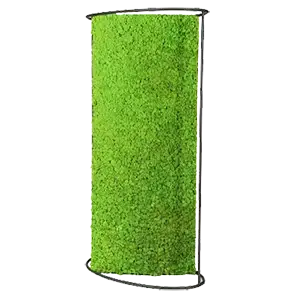
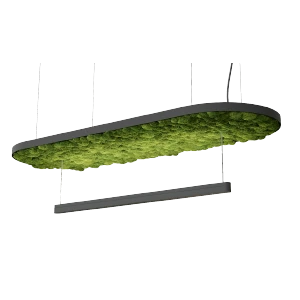
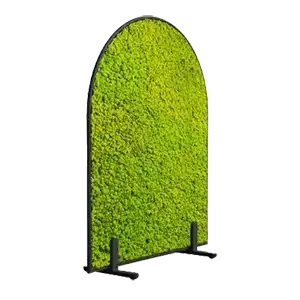
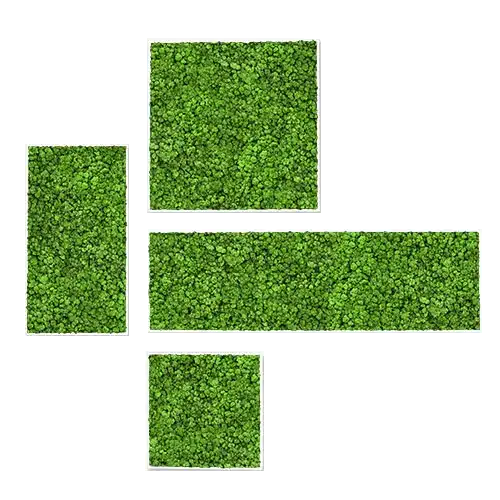
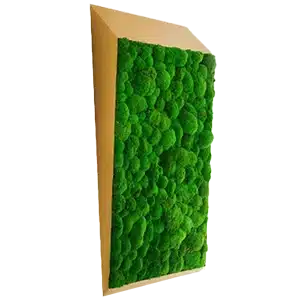
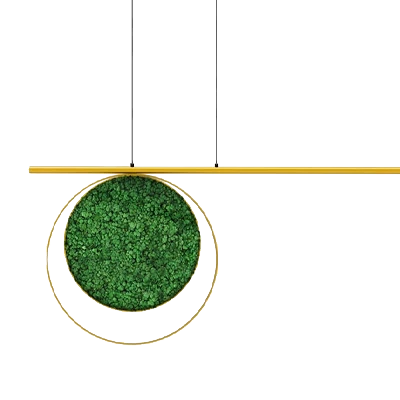
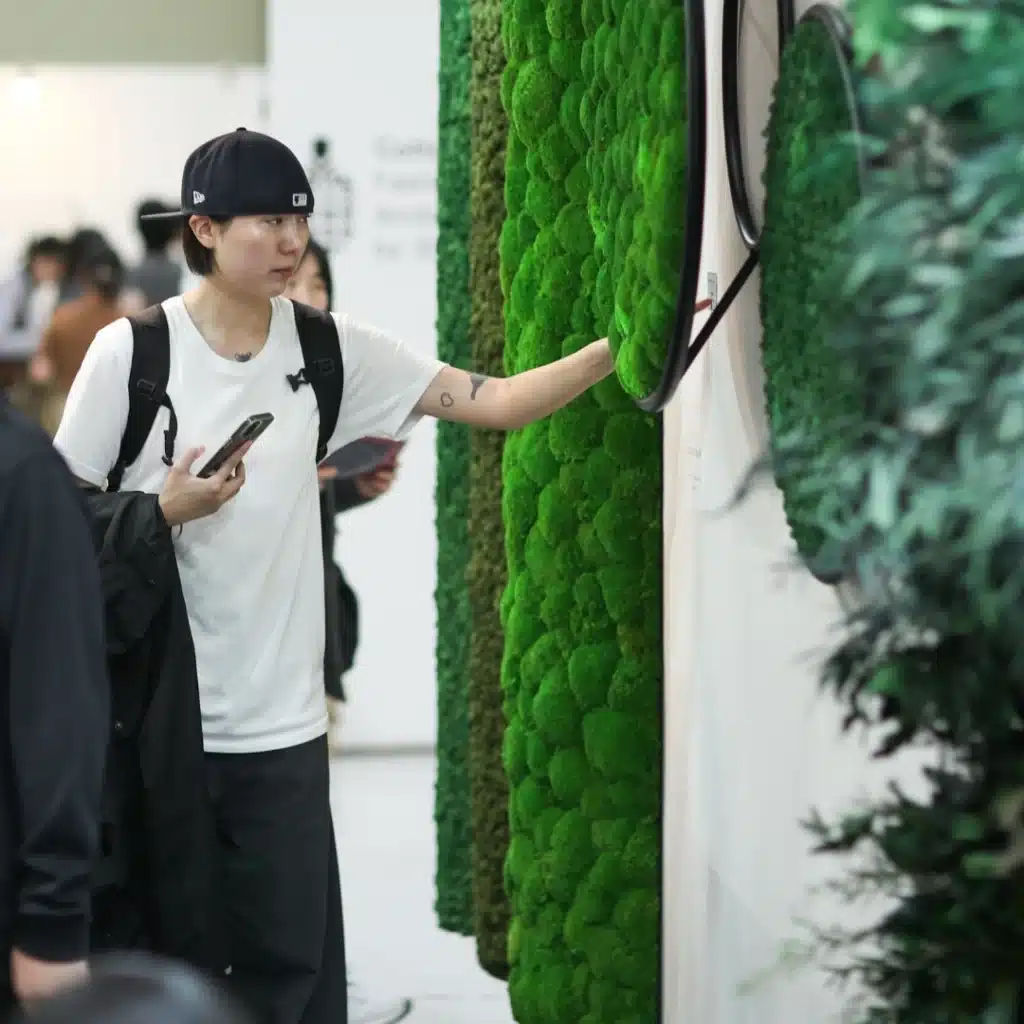
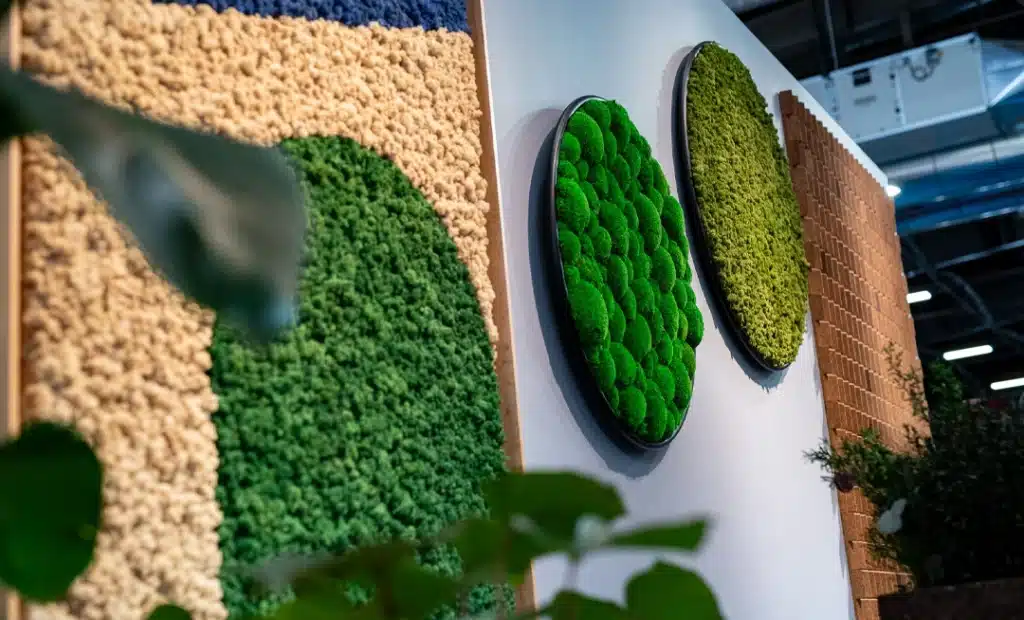
Preserved moss and plant walls deliver biophilic benefits with architectural predictability
- No irrigation, no drainage, no biological growth
- Stable material composition over 10+ years
- Consistent acoustic absorption (measurable NRC)
- Fire-tested as complete assemblies, not individual materials
- No seasonal variability or replacement cycles
- Compatible with WELL, LEED, and corporate wellness programs
For workplace environments where reliability and long-term performance matter, preserved systems deliver the wellbeing benefits documented in the research without the operational burden that often causes living walls to degrade or be removed within three to five years.
The best biophilic design is the one that still performs five years after handover.
What project teams should specify
To translate the research into measurable outcomes, project teams should approach biophilic design as a performance specification, not a decorative selection.
Final takeaway
The question is no longer whether biophilic design improves workplace outcomes. The question is whether your project can afford to ignore four decades of evidence. Nature connection is not decoration. It is measurable, certifiable, and directly linked to the metrics that matter most: productivity, health, retention, and organizational resilience.
Sources & further reading
- Human Spaces Report, "The Global Impact of Biophilic Design in the Workplace," Interface, 2015. Survey of 7,600 workers, 16 countries.
- Ulrich, R., "View Through a Window May Influence Recovery from Surgery," Science, 1984.
- Terrapin Bright Green, "The Economics of Biophilia," 2nd edition, 2023.
- Yin et al., "Effects of biophilic indoor environment on stress and anxiety recovery," Environment International, 2020.
- Yin et al., "Biophilic office design: Exploring the impact of a multisensory approach on human well-being," Journal of Environmental Psychology, 2021.
- Elzeyadi, I., "Daylighting-Bias and Biophilia," University of Oregon, Greenbuild 2011.
- Heschong Mahone Group, "Daylighting in Schools," 1999.
- "Investigating restorative effects of biophilic workplace design," Intelligent Buildings International, Taylor & Francis, 2024. Systematic review of 74 papers.
- "Explaining the influence of biophilic design on employee well-being," Nature Scientific Reports, 2024.
- WELL Building Standard v2, Biophilia I & II features, International WELL Building Institute.
- Journal of Biophilic Design, "Chief People Priorities for 2026: A Biophilic Response," Issue 18, January 2026.
- UK Green Building Council, research on daylight and sick days.